Article Plan: Organic Chemistry Janice Gorzynski Smith PDF
This detailed exploration dissects Janice Gorzynski Smith’s “Organic Chemistry” PDF, covering its scope, features, and suitability for various academic levels and learning styles.
Janice Gorzynski Smith’s “Organic Chemistry” stands as a widely-adopted textbook, renowned for its student-centric approach to a traditionally challenging subject. The book aims to demystify organic chemistry, presenting concepts in an accessible and engaging manner. It’s designed to appeal to a broad range of students, regardless of their prior chemistry background.
The textbook distinguishes itself through a deliberate reduction in lengthy prose, favoring instead a visually-rich learning experience. This is achieved through extensive use of diagrams, bulleted summaries, and meticulously labeled illustrations. Smith’s approach acknowledges the evolving learning preferences of modern students, who often benefit from visual aids and concise information delivery; The PDF version maintains this core philosophy, offering a portable and searchable resource for students navigating the complexities of organic chemistry. It includes comprehensive coverage from foundational principles to advanced biomolecules.

Overview of “Organic Chemistry” by Janice Gorzynski Smith
Smith’s “Organic Chemistry” is a comprehensive text, covering fundamental principles, reactions, and biomolecules with a focus on visual learning and student accessibility.
Target Audience and Course Level
Janice Gorzynski Smith’s “Organic Chemistry” primarily targets undergraduate students enrolled in first or second-semester organic chemistry courses. The textbook is ideally suited for students with a foundational understanding of general chemistry principles, as it builds upon those concepts. It caters to a diverse range of science majors, including chemistry, biology, pre-med, and related fields.
The book’s approach—less prose, more visuals—makes it particularly effective for students who benefit from a more diagram-heavy and concise learning style. It’s designed to be accessible without sacrificing the necessary rigor for success in subsequent, more advanced chemistry coursework. The content aligns well with standard organic chemistry curricula, preparing students for further studies in biochemistry, pharmaceuticals, and other specialized areas. The textbook’s comprehensive nature also makes it a valuable resource for self-study and review.
Key Features and Approach
“Organic Chemistry” by Janice Gorzynski Smith distinguishes itself through a student-centric approach, prioritizing clarity and visual learning. A hallmark feature is the minimized use of lengthy text paragraphs, replaced by concise bulleted summaries and highly detailed, well-labeled illustrations. This design caters to modern students who often rely heavily on visual aids for comprehension.
The textbook emphasizes the “beauty and logic” of organic chemistry, aiming to make the subject more engaging and accessible. It incorporates a modernized look with updated chemical structures and a focus on relevance. The author’s extensive teaching experience informs the pedagogical choices, ensuring the material is presented in a way students readily grasp. The PDF format enhances accessibility, allowing for convenient study across various devices and platforms.

Core Concepts Covered
The textbook systematically explores fundamental principles, ranging from matter and measurement to nuclear chemistry, alongside comprehensive organic chemistry topics and biomolecules.
Matter and Measurement
Janice Gorzynski Smith’s text begins with a foundational exploration of matter and measurement, establishing the essential groundwork for understanding chemical principles. This section meticulously covers the states of matter, physical and chemical properties, and the crucial role of units in scientific calculations.
Students are guided through significant figures, scientific notation, and dimensional analysis – skills vital for accurate problem-solving. The book emphasizes the importance of precise measurements and their impact on experimental results. Furthermore, it delves into the classification of matter, distinguishing between elements, compounds, and mixtures.
This initial chapter provides a robust understanding of how to quantify and describe the physical world, setting the stage for more complex chemical concepts explored throughout the textbook. It’s a cornerstone for success in subsequent chapters, ensuring students possess the necessary analytical tools.
Atoms and the Periodic Table
Building upon the foundation of matter and measurement, Janice Gorzynski Smith’s “Organic Chemistry” meticulously examines atomic structure and the organization of the periodic table. This section details the components of an atom – protons, neutrons, and electrons – and their respective roles in determining an element’s properties;
The text clearly explains isotopes, atomic mass, and the development of the modern periodic table, highlighting trends in electronegativity, ionization energy, and atomic radius. Students learn to predict chemical behavior based on an element’s position within the table.
Smith’s approach emphasizes the relationship between electronic configuration and chemical bonding, crucial for understanding molecular structure. This chapter provides a solid understanding of the building blocks of matter and their arrangement, essential for grasping organic chemistry concepts.
Ionic and Covalent Compounds
Following the discussion of atoms, Janice Gorzynski Smith’s “Organic Chemistry” delves into the formation of chemical bonds, specifically focusing on ionic and covalent compounds. The text meticulously explains the transfer of electrons in ionic bonding, resulting in the creation of ions and electrostatic attraction.
Conversely, the sharing of electrons in covalent bonding is thoroughly detailed, including single, double, and triple bonds. Smith emphasizes the concept of electronegativity and its influence on bond polarity, leading to partial charges within molecules.
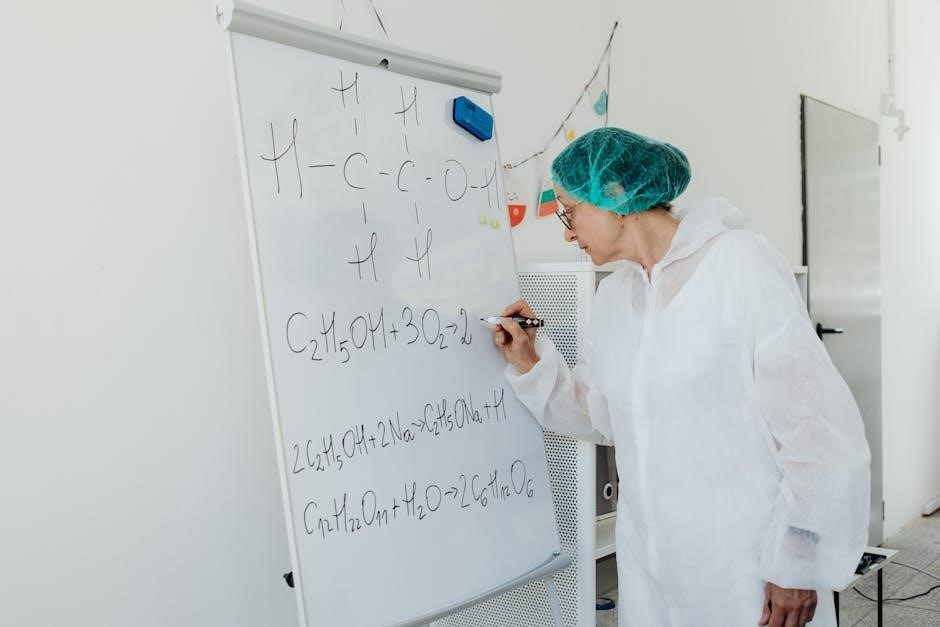
The chapter also covers Lewis structures, VSEPR theory, and molecular geometry, enabling students to visualize and predict the shapes of molecules. Understanding these bonding principles is fundamental to comprehending the properties and reactivity of organic compounds.
Chemical Reactions and Stoichiometry
Janice Gorzynski Smith’s “Organic Chemistry” dedicates significant attention to chemical reactions and stoichiometry, building upon the foundation of atomic structure and bonding. The text provides a comprehensive overview of writing and balancing chemical equations, crucial for predicting the quantitative relationships in reactions.
Students learn to calculate mole ratios, limiting reactants, and percent yield, applying these concepts to both inorganic and organic reactions. Emphasis is placed on understanding reaction types – combination, decomposition, single replacement, and double replacement – and their associated energy changes.
The book also introduces the concept of reaction rates and equilibrium, laying the groundwork for understanding reaction mechanisms and kinetics in later chapters. Practical examples and problem-solving strategies are integrated throughout, reinforcing student comprehension.
Organic Chemistry Fundamentals
Smith’s text expertly introduces core organic concepts, including molecular structures, functional groups, alkanes, unsaturated hydrocarbons, and compounds containing oxygen, halogens, and sulfur.
Janice Gorzynski Smith’s approach to organic molecules and functional groups is foundational, meticulously laying the groundwork for understanding complex organic chemistry. The textbook begins by establishing the unique characteristics of carbon, its bonding capabilities, and its prevalence in organic compounds. It then systematically introduces the primary functional groups – hydrocarbons, alcohols, ethers, amines, aldehydes, ketones, carboxylic acids, esters, and amides – detailing their structures, nomenclature, and reactivity.
Crucially, the text emphasizes the relationship between molecular structure and chemical properties, utilizing clear diagrams and concise explanations. Students learn to identify functional groups within molecules and predict their behavior in various reactions. This section doesn’t just present definitions; it fosters a conceptual understanding of how these groups influence the overall characteristics of organic compounds, preparing students for more advanced topics like reaction mechanisms and synthesis.
Alkanes and Nomenclature
Smith’s treatment of alkanes and nomenclature within “Organic Chemistry” is exceptionally thorough, prioritizing a systematic approach to understanding these fundamental concepts. The text meticulously details the rules established by the IUPAC (International Union of Pure and Applied Chemistry) for naming alkanes, including straight-chain, branched-chain, and cyclic structures. Emphasis is placed on identifying the parent chain, numbering carbon atoms correctly, and assigning names to substituents.
The textbook utilizes numerous examples and practice problems, allowing students to hone their skills in both naming and drawing alkane structures. It also explores the physical properties of alkanes – boiling point, melting point, and density – relating these properties to molecular weight and structure. This section builds a strong foundation for understanding more complex hydrocarbon families and their associated reactions.
Unsaturated Hydrocarbons (Alkenes, Alkynes)
Janice Gorzynski Smith’s “Organic Chemistry” presents alkenes and alkynes as logical extensions of alkane chemistry, clearly illustrating the impact of pi bonds on molecular structure and reactivity. The text meticulously covers the nomenclature of these unsaturated hydrocarbons, emphasizing the numbering system to indicate alkene/alkyne position and geometric isomerism (cis/trans).
A significant strength lies in the detailed explanation of reaction mechanisms, particularly addition reactions characteristic of alkenes and alkynes. Smith effectively uses visual aids – diagrams and reaction schemes – to demonstrate electrophilic addition, hydrogenation, and halogenation. The discussion extends to the relative stability of alkenes based on substitution patterns, preparing students for understanding more complex reaction outcomes.
Organic Compounds with Oxygen, Halogens, and Sulfur
Smith’s “Organic Chemistry” systematically explores the diverse world of organic compounds incorporating oxygen, halogens, and sulfur, building upon foundational hydrocarbon knowledge. The text provides a comprehensive overview of alcohols, ethers, and phenols, detailing their physical properties, nomenclature, and characteristic reactions – notably, reactions involving the hydroxyl group.
Halogenated compounds are presented with a focus on their synthesis and reactivity, including SN1 and SN2 substitution mechanisms. The inclusion of sulfur-containing compounds, like thiols and sulfides, broadens the scope, highlighting their unique properties and applications. Throughout these chapters, Smith employs clear diagrams and concise summaries to aid comprehension, ensuring students grasp the nuances of each functional group’s behavior.

Functional Group Chemistry
This section meticulously details aldehydes, ketones, carboxylic acids, esters, amides, and amines, emphasizing their structures, reactions, and biological relevance within Smith’s text.
Aldehydes and Ketones
Janice Gorzynski Smith’s treatment of aldehydes and ketones within the “Organic Chemistry” PDF is comprehensive, focusing on their nomenclature, physical properties, and characteristic chemical reactions. The text thoroughly explains the carbonyl group’s reactivity, detailing nucleophilic addition reactions – a cornerstone of this functional group’s chemistry.
Students will find detailed coverage of oxidation and reduction reactions, including the use of common reagents. Smith emphasizes the differences in reactivity between aldehydes and ketones, linking these differences to steric and electronic factors. Furthermore, the material explores important named reactions involving aldehydes and ketones, such as the Wittig reaction and aldol condensation, providing clear mechanisms and illustrative examples.
The PDF’s visual aids, including detailed diagrams, effectively demonstrate reaction pathways and structural features, enhancing comprehension. The text also highlights the biological significance of these compounds, connecting them to metabolic pathways and naturally occurring molecules.
Carboxylic Acids, Esters, and Amides
The “Organic Chemistry” PDF by Janice Gorzynski Smith dedicates significant attention to carboxylic acids, esters, and amides, detailing their structures, properties, and reactivity. The text meticulously explains the acidity of carboxylic acids, exploring the influence of inductive and resonance effects. Esterification and hydrolysis reactions are covered extensively, with clear mechanisms illustrating the processes.
Smith’s approach emphasizes the importance of amide bond formation in biological systems, particularly in peptide and protein synthesis. The PDF thoroughly examines the unique properties of amides, including their resonance stabilization and planar geometry. Reactions involving these functional groups, such as saponification and amide hydrolysis, are presented with detailed explanations and illustrative examples.
Visual representations within the PDF aid in understanding complex reaction mechanisms and structural nuances, solidifying student comprehension of these crucial organic compounds.
Amines and Neurotransmitters
Janice Gorzynski Smith’s “Organic Chemistry” PDF provides a comprehensive overview of amines, classifying them as primary, secondary, and tertiary, and detailing their basic properties stemming from the lone pair on nitrogen; The text explores the impact of alkyl group substitution on amine basicity, alongside discussions of their reactivity in various chemical transformations.
A particularly noteworthy aspect is the PDF’s connection of amines to neurotransmitters – vital chemical messengers within the nervous system. Smith elucidates the structures and functions of key neurotransmitters like dopamine, serotonin, and epinephrine, highlighting their amine functionalities.
The material emphasizes the biological relevance of amines, explaining their roles in signal transduction and neurological processes. Detailed diagrams and reaction schemes within the PDF enhance understanding of amine synthesis and metabolic pathways, bridging organic chemistry principles with biological applications.
Biomolecules
The “Organic Chemistry” PDF expertly details biomolecules—lipids, carbohydrates, proteins, and nucleic acids—emphasizing their structures, functions, and crucial roles within living organisms.
Lipids: Structure and Function
Janice Gorzynski Smith’s “Organic Chemistry” PDF provides a comprehensive examination of lipids, moving beyond simple fats to explore their diverse structures and essential biological roles. The text meticulously details the classification of lipids – triglycerides, phospholipids, steroids, and waxes – emphasizing their unique compositions and properties.
Students gain insight into the formation of triglycerides from glycerol and fatty acids, understanding the impact of saturation and unsaturation on physical characteristics. The crucial role of phospholipids in forming biological membranes is thoroughly explained, alongside the structural complexity of steroids like cholesterol and its derivatives.
Furthermore, the PDF elucidates the functions of lipids, extending beyond energy storage to encompass hormonal signaling, insulation, and protection of vital organs. Detailed diagrams and clear explanations ensure students grasp the intricate relationship between lipid structure and biological activity, preparing them for advanced studies in biochemistry and related fields.
Carbohydrates: Classification and Properties
Within Janice Gorzynski Smith’s “Organic Chemistry” PDF, carbohydrates are presented as fundamental biomolecules, categorized into monosaccharides, disaccharides, and polysaccharides. The text meticulously details the structural differences between these classes, emphasizing the importance of carbon-hydrogen-oxygen ratios and cyclic formations.
Students learn to identify common monosaccharides like glucose, fructose, and galactose, understanding their roles as building blocks for larger carbohydrates. The formation of disaccharides – sucrose, lactose, and maltose – through glycosidic linkages is clearly explained, alongside the complex structures of polysaccharides like starch, glycogen, and cellulose.
The PDF also explores the physical and chemical properties of carbohydrates, including their solubility, sweetness, and reactivity. Detailed illustrations and concise summaries aid comprehension, preparing students to analyze carbohydrate metabolism and their vital functions in living organisms.
Amino Acids, Proteins, and Enzymes
Janice Gorzynski Smith’s “Organic Chemistry” PDF dedicates significant attention to amino acids, the building blocks of proteins. It thoroughly explains the general structure of amino acids, highlighting the central carbon atom and its variable side chains – crucial for determining unique properties. The formation of peptide bonds to create polypeptide chains is illustrated with clarity.
The text details the four levels of protein structure – primary, secondary, tertiary, and quaternary – emphasizing the forces responsible for each level of folding. Furthermore, the PDF explores the crucial role of enzymes as biological catalysts, detailing their specificity and mechanism of action.
Students gain insight into enzyme kinetics and factors influencing enzyme activity, preparing them for advanced biochemical concepts. Diagrams and concise summaries enhance understanding of these complex biological molecules.
Nucleic Acids and Protein Synthesis
Janice Gorzynski Smith’s “Organic Chemistry” PDF provides a foundational understanding of nucleic acids – DNA and RNA – essential for genetic information storage and transfer. The text details the structure of nucleotides, including the sugar, phosphate group, and nitrogenous bases (adenine, guanine, cytosine, thymine/uracil), and how they polymerize to form nucleic acid strands.
Crucially, the PDF explains the double helix structure of DNA and the base-pairing rules (A-T, G-C). It then bridges organic chemistry to biology by outlining the central dogma of molecular biology: DNA replication, transcription (DNA to RNA), and translation (RNA to protein).

The role of mRNA, tRNA, and ribosomes in protein synthesis is clearly explained, solidifying the connection between organic molecules and life processes.

Additional Topics
Beyond core organic principles, Smith’s PDF delves into nuclear chemistry and metabolic pathways, enriching the student’s understanding of chemical applications.
Nuclear Chemistry
Janice Gorzynski Smith’s “Organic Chemistry” PDF incorporates a crucial section dedicated to nuclear chemistry, providing a foundational understanding of radioactivity and its implications. This segment moves beyond traditional organic concepts, exploring the structure of the atomic nucleus and the types of radioactive decay – alpha, beta, and gamma emission.
The textbook explains how nuclear reactions differ from chemical reactions, emphasizing the changes occurring within the nucleus rather than electron sharing or transfer. Students learn about nuclear stability, isotopes, and the concept of half-life, vital for understanding radioactive dating and medical applications. Furthermore, the material touches upon nuclear fission and fusion, outlining their energy release and potential uses.
Smith effectively connects these nuclear principles to organic chemistry, illustrating how radioactive isotopes are utilized as tracers in biochemical research and drug development. This integration demonstrates the broader applicability of chemical knowledge and prepares students for interdisciplinary studies.
Metabolism: Carbohydrate, Lipid, and Protein
Janice Gorzynski Smith’s “Organic Chemistry” PDF culminates in a detailed exploration of metabolism, bridging the gap between molecular structures and biological processes. This section delves into the intricate pathways of carbohydrate, lipid, and protein metabolism, demonstrating how these biomolecules are broken down and utilized for energy production.
The textbook meticulously outlines glycolysis, the Krebs cycle, and the electron transport chain, explaining how glucose is converted into ATP, the cell’s primary energy currency. Lipid metabolism, including beta-oxidation and fatty acid synthesis, is also thoroughly covered. Furthermore, protein metabolism, encompassing amino acid degradation and urea cycle, is presented with clarity.
Smith emphasizes the interconnectedness of these metabolic pathways, illustrating how they are regulated and influenced by hormones. This holistic approach provides students with a comprehensive understanding of how organic chemistry underpins life itself;