
Kindergarten Common Core Standards PDF: A Comprehensive Overview (Updated 03/14/2026)
Today, March 14th, 2026, access comprehensive Kindergarten Common Core Standards PDFs, including ELA and Math cheat sheets for grades 1-5, aiding school success!
What are the Kindergarten Common Core Standards?
Kindergarten Common Core Standards define what young learners should know and be able to do by the end of their first year of formal schooling. These standards, initially published in 2012, cover essential skills in English Language Arts (ELA) and Mathematics, preparing students for continued academic success.
Specifically, these standards encompass foundational areas like phonological awareness, print concepts, and early reading skills in ELA. In Mathematics, they focus on counting, cardinality, and the beginnings of operations and algebraic thinking. Resources like those from the New York State Education Department and the Core Knowledge Foundation offer guidance for implementation.
Cheat sheets are readily available, consolidating all standards onto one page for easy reference, spanning grades 1-5. These PDFs serve as valuable tools for teachers, specialists, and administrators in designing effective kindergarten programs, ensuring alignment with national expectations.
The Common Core State Standards Initiative (CCSSI)
The Common Core State Standards Initiative (CCSSI) emerged as a collaborative effort to establish consistent, clear, and rigorous learning goals across states. This initiative aimed to ensure all students, regardless of location, graduate high school prepared for college, career, and life. The standards were developed through extensive research and input from educators, parents, and experts.
Within the Kindergarten Common Core Standards, the CCSSI framework emphasizes a balanced approach to learning, integrating both English Language Arts and Mathematics. Resources like those from the Core Knowledge Foundation demonstrate alignment with these standards, often indicating whether content is covered at, above, or below grade level.

Access to PDF versions of these standards facilitates easy distribution and reference for educators. These documents, including helpful cheat sheets, support effective curriculum design and instructional practices aligned with the CCSSI’s overarching goals.
Availability of Kindergarten Common Core Standards PDFs
Kindergarten Common Core Standards PDFs are readily accessible online through various educational resources. Numerous websites offer downloadable versions, including comprehensive documents and convenient cheat sheets covering all standards on a single page. These resources extend beyond kindergarten, with similar PDFs available for grades 1-5, providing a consistent reference point for educators.
The Common Core State Standards Initiative website itself serves as a primary source. Additionally, state-specific departments of education, like the New York State Education Department, provide resources tailored to their curriculum. These PDFs often include detailed explanations and guidance for implementation.
Websites specializing in educational materials, such as those offering Common Core Worksheets, also host these PDFs, making them easily searchable and downloadable for classroom use and planning.
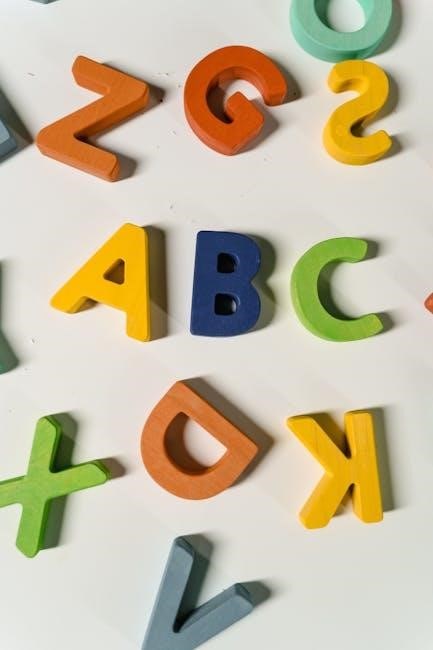
English Language Arts (ELA) Standards
Kindergarten ELA standards focus on phonological awareness, print concepts, reading literature, informational text, language skills, and speaking/listening.
Phonological Awareness & Phonemic Awareness
Kindergarten students begin their journey into literacy with a crucial focus on phonological awareness, the broad skill of recognizing and manipulating the sounds within words. This foundational element encompasses identifying rhymes, syllables, and recognizing beginning sounds.
Specifically, phonemic awareness – a subset of phonological awareness – centers on the individual sounds, or phonemes, within words. Kindergarten standards emphasize the ability to isolate, blend, and segment these sounds. For example, students learn to identify the initial sound in “cat” or blend sounds like /c/ /a/ /t/ to form the word “cat”.
These skills are vital precursors to decoding and encoding, setting the stage for successful reading and writing development. Resources like cheat sheets and guides support teachers in implementing these standards effectively, ensuring all students build a strong phonetic foundation.
Print Concepts & Early Literacy Skills
Kindergarten Common Core Standards prioritize developing a strong understanding of print concepts, the foundational knowledge of how books work. Students learn to recognize the parts of a book – front cover, back cover, title page – and understand the directionality of print, moving from left to right and top to bottom.
Early literacy skills also encompass recognizing that letters represent sounds and that words are separated by spaces. Children begin to identify uppercase and lowercase letters and understand that print carries meaning. These concepts are reinforced through shared reading experiences and interactive activities.
Resources, including PDF guides from the New York State Education Department, provide teachers with strategies to explicitly teach these skills. Mastery of print concepts is essential for building confident and capable readers.
Reading Literature Standards for Kindergarten
Kindergarten Common Core Standards for Reading Literature focus on building foundational skills in comprehension and analysis. Students learn to actively engage with stories, asking and answering questions about key details – characters, setting, and major events. They begin to retell stories in their own words, demonstrating understanding of the narrative sequence.
A crucial aspect involves identifying the main message or lesson of a story, often referred to as the moral. Children also explore different types of literature, including fiction, poetry, and folktales. These standards emphasize the importance of reading aloud and fostering a love of literature.
PDF resources, like those aligned with the Core Knowledge Foundation, offer guidance on selecting appropriate texts and implementing effective reading strategies.
Reading Informational Text Standards for Kindergarten
Kindergarten Common Core Standards for Reading Informational Text introduce young learners to the world of non-fiction. Students begin to identify the main topic of a text and ask and answer questions about key details presented within it. They learn to recognize the connection between illustrations and the words they accompany, enhancing comprehension.
These standards emphasize developing the ability to distinguish between information and opinion, a foundational skill for critical thinking. Kindergarteners also start to identify the author and illustrator of a text, understanding their roles in conveying information.
Resources, often available as PDFs, support teachers in selecting age-appropriate informational texts and implementing strategies to build comprehension skills. These resources align with initiatives like the New York State Education Department guidelines.
Language Standards: Foundational Skills
Kindergarten Common Core Language Standards: Foundational Skills focus on building a strong base for reading and writing. These standards encompass a range of abilities, including demonstrating understanding of spoken words, syllables, and sounds (phonemes). Students learn to isolate and pronounce these sounds, a crucial step in decoding words.
A key component involves recognizing and producing rhyming words, and understanding syllable segmentation. These skills are often supported by readily available PDF resources and cheat sheets. Furthermore, kindergarteners begin to identify the letters of the alphabet and their corresponding sounds.

The Common Core State Standards Initiative emphasizes a systematic approach to phonics, ensuring students develop the necessary skills for fluent reading. Resources from organizations like the Core Knowledge Foundation align with these standards.
Language Standards: Vocabulary Acquisition and Use
Kindergarten Common Core Language Standards concerning Vocabulary Acquisition and Use center on expanding a child’s lexicon through diverse experiences. Students begin to understand and utilize new words in context, actively engaging with language during conversations and reading.
A core objective is differentiating between the meanings of words, recognizing that words can have multiple interpretations. Kindergarteners also learn to identify frequently occurring prepositions and their functions within sentences. Accessing PDF resources and cheat sheets can greatly assist in reinforcing these concepts.
The Common Core State Standards Initiative promotes a rich language environment, encouraging teachers to introduce new vocabulary systematically. Resources from the New York State Education Department offer guidance on implementing these standards effectively.
Speaking and Listening Standards
Kindergarten Common Core Speaking and Listening Standards emphasize collaborative conversations and effective communication skills. Students learn to participate in group discussions, building on others’ ideas and expressing their own thoughts clearly. PDF resources, like those from the Common Core State Standards Initiative, provide detailed guidance.
A key focus is active listening – understanding and responding to what others say. Kindergarteners practice asking and answering questions, demonstrating comprehension of information presented orally. The Core Knowledge Foundation aligns its curriculum to support these standards, offering valuable resources.
These standards also encourage children to describe familiar people, places, and things, using descriptive language. Utilizing cheat sheets and guides from sources like the New York State Education Department can aid in successful implementation.

Mathematics Standards
Kindergarten Common Core Mathematics Standards PDFs cover Counting & Cardinality, Operations & Algebraic Thinking, Geometry, and Measurement & Data skills.
Counting & Cardinality
Counting & Cardinality, a core component of Kindergarten Common Core Mathematics Standards, focuses on foundational number sense. PDF resources detail expectations for students to know number names and count sequentially up to 100, by ones and tens.
These standards emphasize understanding the relationship between numbers and quantities. Students learn to count objects, representing a quantity with a number, and recognizing that the last number named in counting tells the total number of objects.
Kindergarten PDFs also outline skills in comparing numbers – determining which of two numbers is greater or less. Furthermore, students begin to understand the concept of cardinality: that the number of objects is the same regardless of their arrangement or order. Worksheets and assessments aligned with these standards are readily available online.
Operations & Algebraic Thinking

Operations & Algebraic Thinking in Kindergarten Common Core Mathematics introduces foundational concepts, though formal operations are limited at this stage. PDF resources highlight a focus on understanding addition and subtraction as putting together and taking apart with objects.
Students begin to solve addition and subtraction problems within 10 using concrete objects or drawings. These early experiences build a conceptual understanding of these operations, preparing them for more complex work later.
Kindergarten PDFs also emphasize identifying and describing patterns. Recognizing and extending simple patterns – like ABAB – is a key skill. While not explicitly algebraic, these activities lay the groundwork for future algebraic thinking. Worksheets and activities aligned with these standards are available for download, supporting classroom instruction.

Geometry Standards for Kindergarten
Geometry Standards for Kindergarten, as detailed in Common Core Standards PDFs, center around identifying and describing shapes. Students learn to recognize two-dimensional (2D) shapes – circles, squares, triangles, rectangles, and hexagons – regardless of orientation or size.
A key focus is on analyzing shapes, noting their attributes like sides and corners. PDF resources provide activities where children compose shapes to create larger shapes. For example, building a larger shape from smaller triangles.

Furthermore, kindergarteners begin to explore three-dimensional (3D) shapes, though identification is the primary goal. Worksheets and assessments, often found in Kindergarten Common Core packets, help gauge understanding. These resources emphasize spatial reasoning and geometric vocabulary, building a foundation for future geometric studies.
Measurement & Data
Measurement & Data standards for Kindergarten, accessible through Common Core Standards PDFs, introduce foundational concepts. Students begin comparing objects based on measurable attributes like length and weight. This involves direct comparison – determining which object is longer or heavier – rather than using standard units.
PDF resources emphasize classifying objects into categories, counting the number of objects in each category, and then comparing those counts. This builds early data analysis skills. Activities often involve sorting toys, buttons, or other manipulatives.
Worksheets within Kindergarten Common Core materials focus on understanding the concept of more or less. Students learn to describe the relative position of objects using terms like above, below, beside, in front of, and behind. These skills lay the groundwork for more complex measurement and data interpretation later on.

Resources for Understanding & Implementing Standards
PDF guides from New York State, Core Knowledge alignment, and convenient cheat sheets empower educators to effectively utilize Kindergarten Common Core.
New York State Education Department Resources
The New York State Education Department (NYSED) provides invaluable resources for understanding and implementing the Kindergarten Common Core Standards. Specifically, the “RESOURCE GUIDES FOR SCHOOL SUCCESS: THE KINDERGARTEN EARLY LEARNING STANDARDS”, published in 2012, serves as a crucial reference tool.
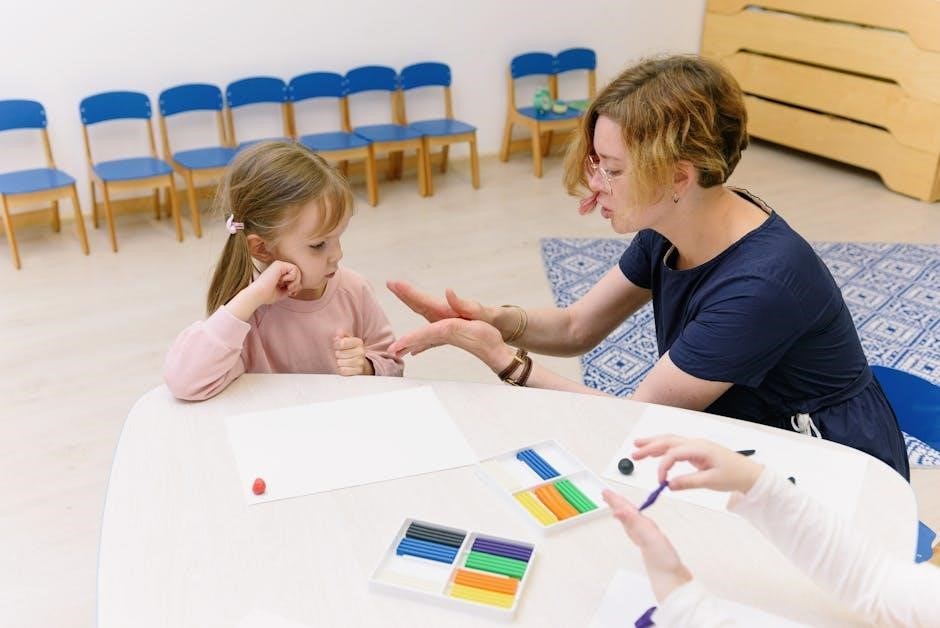
This comprehensive resource was collaboratively developed by the NYSED’s offices of Early Learning and Curriculum and Instruction. It’s intentionally designed for a broad audience – teachers, specialists, and administrators – all responsible for crafting effective programs for kindergarten students.
The guide aims to clarify expectations and support consistent implementation of the standards across New York State. Educators can leverage this PDF document to ensure alignment between curriculum, instruction, and assessment practices, ultimately fostering optimal learning outcomes for young learners. It’s a cornerstone for successful Common Core integration.
Core Knowledge Foundation Alignment
The Core Knowledge Foundation has meticulously analyzed the alignment between its curriculum and the Kindergarten Common Core State Standards. Their work, completed and revised as of December 21, 2010, provides a detailed mapping of standards coverage.
According to their analysis, a significant portion of the Common Core standards are directly covered at the appropriate Core Knowledge (CK) grade level. Furthermore, the Foundation identifies standards that are addressed above or below the typical CK grade level, offering valuable insights for instructional pacing and differentiation.
Specifically, within the domain of Listening and Speaking, the CK curriculum supports participation in age-appropriate classroom discussions. This alignment information, often available in PDF format, assists educators in leveraging Core Knowledge resources to effectively meet Common Core expectations.
Cheat Sheets & Quick Reference Guides
Kindergarten Common Core ELA Standards are readily accessible through convenient cheat sheets, consolidating all standards onto a single page for quick reference. These invaluable resources aren’t limited to Kindergarten; similar cheat sheets are available for grades 1 through 5, providing consistency across elementary education.
Educators seeking similar support for Mathematics standards can also find dedicated cheat sheets designed to streamline lesson planning and assessment. These guides are often formatted as easily downloadable PDF documents, facilitating both digital and print access.
These quick reference guides are designed to simplify complex standards, making them more manageable for teachers and promoting a deeper understanding of learning objectives. They are a vital tool for effective implementation.
California Common Core State Standards ELA
California’s implementation of the Common Core State Standards for English Language Arts (ELA) in Kindergarten focuses on building a strong foundation in literacy. These standards, often available as PDF documents, emphasize increasing expectations for young learners, particularly in areas like phonological awareness and print concepts.
The California standards align closely with the national Common Core, but may include specific state-level adaptations. Resources detailing these standards often highlight the progression of skills, noting what children are expected to demonstrate at the Kindergarten level.
Accessing these PDF resources allows educators to understand the specific benchmarks for reading literature and informational text, ensuring students are prepared for future academic success.